The 10 Best Lawn Edgers
The 10 Best Lawn Edgers

I love my plants, but I’m not the best at remembering to water them. Between work, kids, and just life, a week can go by and suddenly my poor monstera is looking pretty sad. And don’t even get me started on trying to keep everything alive when we go on vacation for a week.
That’s where self-watering planters have been a total lifesaver for me. These things use a reservoir and a wicking system to give your plants a steady drink of water right at the roots, but only when they need it. It’s the easiest way I’ve found to get automatic plant watering without a complicated setup.
Over the years, I’ve tried a bunch of them, from tiny herb pots on my windowsill to big raised beds on the patio. Some are great, some not so much. Here are the ones that have earned a permanent spot in my home and garden as of 2026.
This pot costs about $25, and it’s my go-to for most of my indoor houseplants.
What I really like is the design. The plant sits on a little elevated grid, so the roots aren’t just sitting in a puddle of water. This lets air get in there and seriously helps prevent root rot, which has killed more of my plants than I care to admit. I can fill the reservoir and forget about it for almost two weeks.
The Downside: There’s no water-level indicator on the outside. You just have to lift the inner pot to check, which is easy enough, but it’s still an extra step.
For just $15, you really can’t beat the Bloem Ariana for small plants.
I use these for things like African violets and for starting herbs before they move outside. It’s a simple, sturdy plastic pot with a wicking disk at the bottom that does the job. It comes in a ton of colors, so it’s easy to match whatever room you’re putting it in.
The Downside: Just like the HBServices pot, it’s missing a water-level indicator. It’s not a huge deal for a small pot, but it’s something to be aware of.
This one’s around $50, and I have two of them hanging on my back deck railing. They look so much nicer than the cheap plastic window boxes I used to have.
The finish on these is a really nice matte texture that looks high-end. The best part, though, is the watering system. It has a little stick that floats, showing you exactly how much water is left in the reservoir. I fill it up, and my petunias are happy for weeks.
The Downside: It’s definitely more expensive than a basic planter. But for a visible spot like a balcony or front window, I think it’s worth it.
At $200, this is a serious piece of garden gear, but it’s amazing for a small-space vegetable garden.
I have one of these on my stone patio where I grow cherry tomatoes and peppers. The wicking cells underneath distribute water so evenly, I never worry about dry spots. And it came with a trellis, which was perfect for my tomato plants.
The Downside: This thing is big and heavy, especially once you fill it with soil and water. You’ll want to build it exactly where you plan to keep it.
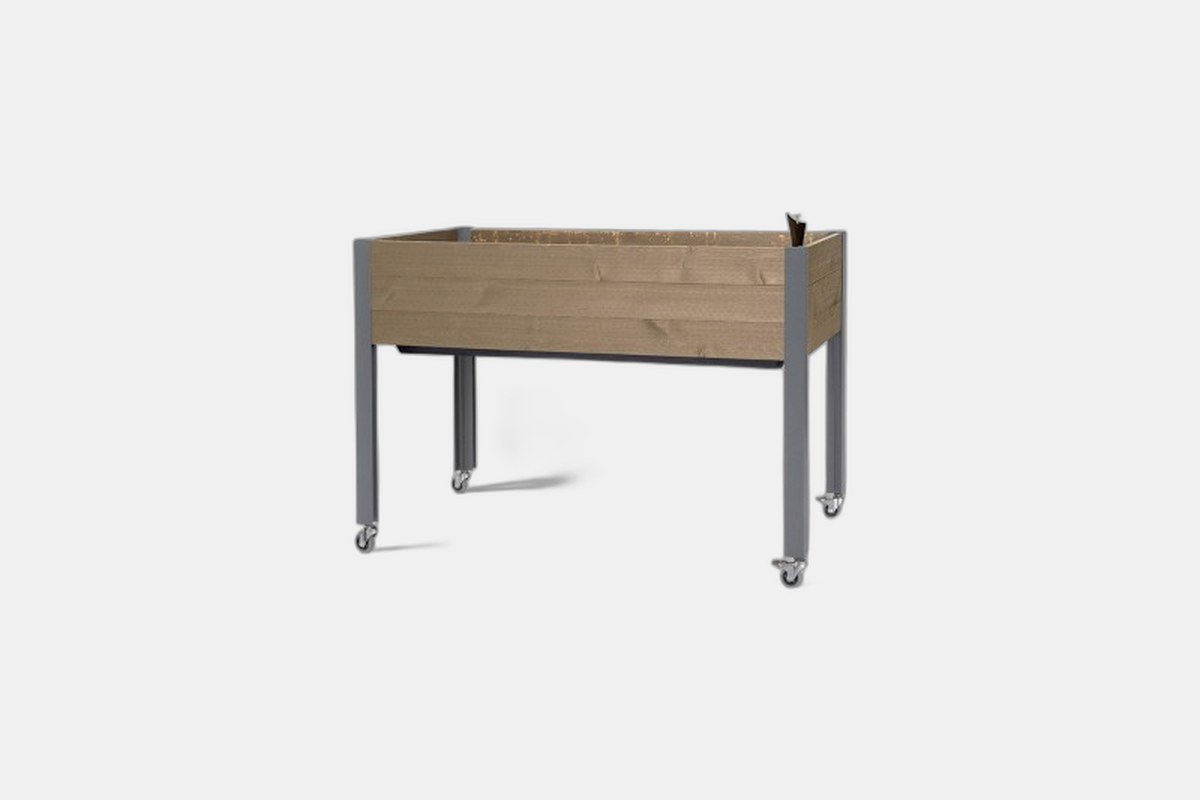
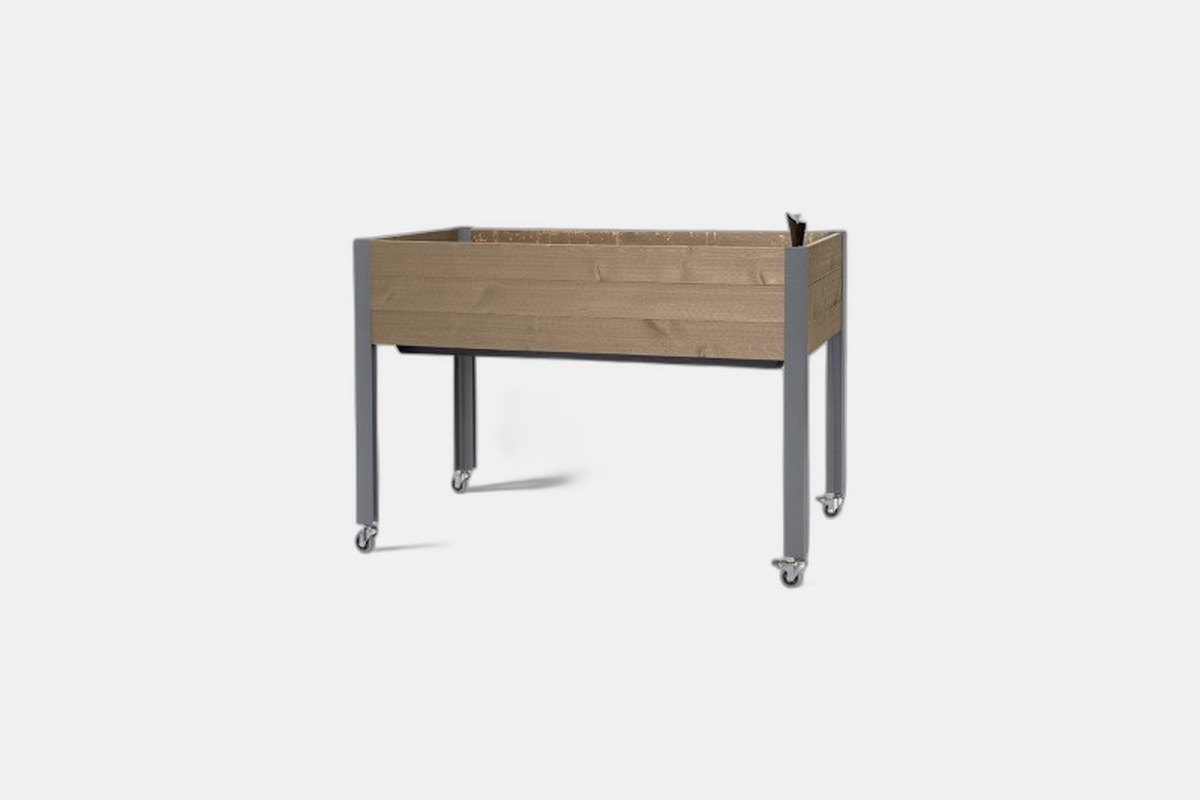
This planter is also $200, and it’s a great choice if you prefer the look of natural wood. The Canadian spruce is beautiful.
The water reservoir on this is a massive six gallons, so it holds a ton of water. I use mine for a cut-and-come-again lettuce mix, and I only have to fill it every few weeks, even in the summer. I also love that it’s elevated, which saves my back from a lot of bending over.
The Downside: It’s made of wood, so it will weather and change color over time. Some people like that rustic look, but if you want it to stay pristine, you’ll need to treat it.
The Keter is a great mid-range option at about $100. It’s perfect for a small deck or balcony.
It’s made from a tough resin that has held up great in the sun and rain for a couple of seasons now. It has a built-in water gauge which is super handy, and a drainage tap to let out excess water after a big storm. It’s been perfect for my little herb garden.
The Downside: It’s not very deep, so it’s best for plants with smaller root systems like herbs, lettuces, or flowers. You probably couldn’t grow a big beefsteak tomato in here.
This clever little pot costs $30 and is perfect for my indoor succulents.
The whole thing ships flat-packed like origami, which is pretty neat and better for the environment. It’s made from recycled materials and uses a simple cotton cord to wick water up from the reservoir. It takes all the guesswork out of watering my more delicate plants.
The Downside: The reservoir is small, so you do have to refill it every two to four weeks. It’s not a big chore, but it’s more frequent than some larger pots.
I got this for $20, and it lives on my kitchen windowsill. It’s exactly what you need for growing fresh herbs.
It’s long and narrow, designed to fit perfectly on a windowsill. I have three small herb plants in mine—basil, mint, and parsley. The self-watering system keeps them from wilting, and I love having fresh herbs right there when I’m cooking.
The Downside: It’s pretty small. You’re limited to herbs or other very small plants, but for what it’s designed for, it works perfectly.
When I’m picking out a new planter, I think about a few things. First is the material. Plastic and resin are lightweight and last forever, but sometimes I just want the classic look of wood or ceramic for my patio. Wood requires a bit more upkeep, but it can be worth it.
The reservoir size is a big one. For my outdoor containers that get blasted by the sun, I look for the biggest reservoir I can find. For indoors, a smaller one that lasts two weeks is usually fine. And I’ll almost always pay a little extra for a model with a water-level indicator. It just makes life so much easier.
Finally, I think about the plant itself. Most common houseplants and vegetables do great with the consistent moisture from a wicking system. But for plants that need to dry out completely, like some succulents or cacti, I’m still careful and sometimes just use the reservoir as a saucer instead of keeping it full all the time.
The 10 Best Lawn Edgers
The 48 Best Gifts for Men
The 10 Best Succulent Soils
The 39 Best Hostess Gifts

Leave a Reply