The 10 Best Lawn Edgers
The 10 Best Lawn Edgers


I remember the first vegetable garden I ever tried to start. I spent a whole weekend with a shovel and a garden fork, turning over a 10×20 foot patch of compacted, clay-like soil. My back ached for a week, and the soil was still clumpy and terrible. That’s when I learned a hard lesson: for serious gardening, you need a good tiller.
A soil tiller doesn’t just save your back; it completely changes the texture of your ground. It breaks up compaction, aerates the soil so roots can breathe, and mixes in compost and amendments way better than you ever could by hand. It turns a frustrating chore into a quick and almost fun job.
So, I’ve spent a lot of time with these machines, from little electric ones for my flower beds to big gas-powered monsters for breaking new ground. After trying a bunch and talking to fellow gardeners, I’ve put together a list of the best tillers you can get in 2026 for different kinds of yards and jobs.
This LawnMaster tiller costs around $150. For the price, you get a ton of power and a really wide tilling path. I was surprised at how easily the 13.5-amp motor chewed through the soil in my established vegetable garden, which I expand a little every year.
The 18-inch width is its best feature, hands down. It means fewer passes to get the job done. And because it’s so light—under 25 pounds—it doesn’t feel like you’re wrestling a beast. It’s easy to push and turn, even in slightly tighter spots.
The Downside: It’s corded, which is always a bit of a pain. You’ll need a good, long extension cord and you have to constantly be aware of where it is so you don’t run it over.
The Earthwise tiller runs about $162. If you’ve got that hard, rocky, clay-infused soil that makes you want to give up gardening, this is the electric model I’d look at. Its motor is built to handle the tough stuff without bogging down.
I like that you can adjust the tilling width from 11 to 16 inches. I use the wider setting for open areas and then narrow it down to get between my perennial rows. The steel tines really hold up, and the simple push-button start is a nice touch.
The Downside: It’s got some heft to it, coming in at almost 30 pounds. It’s not terrible, but you feel that extra weight when you’re maneuvering it around.
At around $140, the Sun Joe is a great value for maintaining existing garden beds. Its 12-amp motor is perfect for turning over soil that’s already been worked before, like your yearly vegetable plot or flower beds.
What I really appreciate is the folding handle. My garage is already packed with tools, so being able to shrink this down for storage is a huge plus. It tills a nice 16-inch wide path and goes down a solid 8 inches deep, which is plenty for most garden plants.
The Downside: This isn’t the machine for breaking new ground. If you have really hard, compacted, or rocky soil, the motor is going to struggle. It’s best for softer dirt.

Okay, this one is a serious machine, with a price tag around $1000. The Troy-Bilt Super Bronco is what you buy when you’re turning a patch of lawn into a huge garden. It’s a gas-powered, rear-tine tiller, and it’s an absolute monster on compacted ground.
The counter-rotating tines are the key. They dig in and churn hard soil into fine, fluffy dirt without bouncing you all over the yard like cheaper tillers do. The 208cc engine has so much torque, you can pretty much guide it with one hand. It just goes.
The Downside: To move it from the garage to the garden, you have to reposition the wheels, which is a bit of a hassle. It’s a small complaint for such a powerful tool, but it’s an extra step.
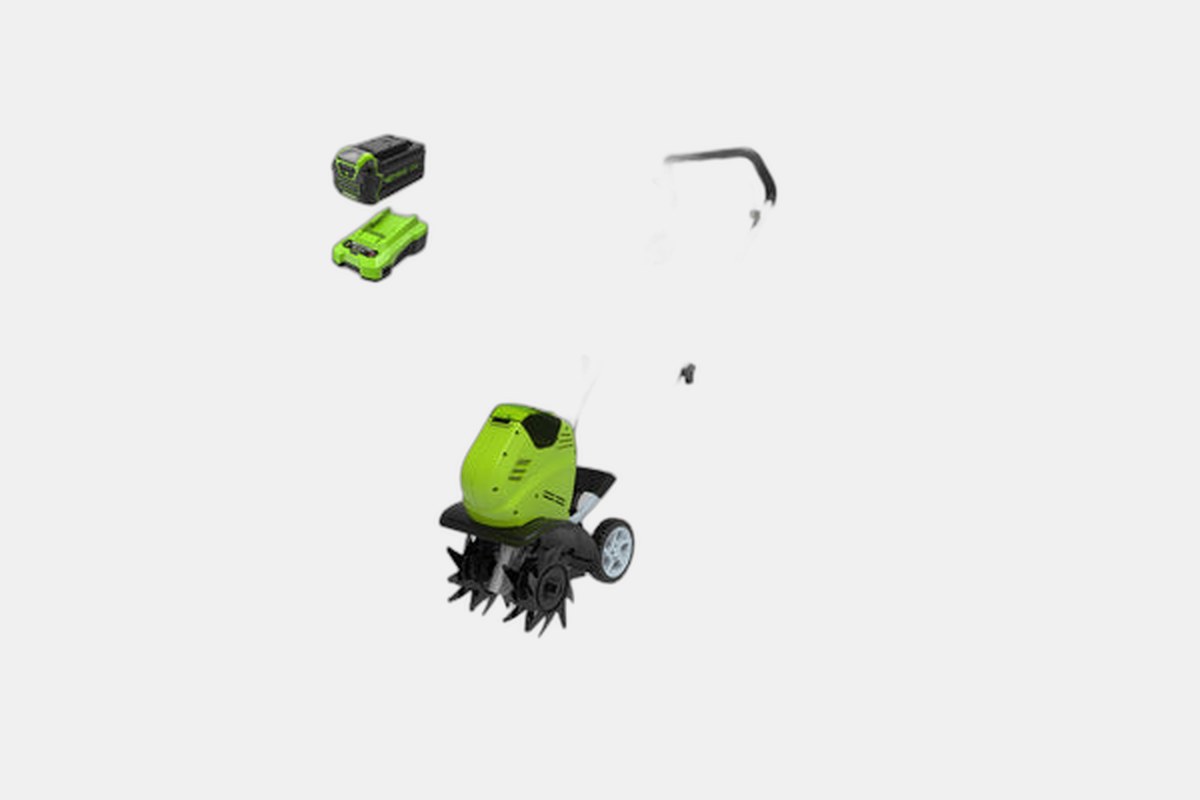
This Greenworks cultivator is about $300, and it’s all about convenience. No cord to trip over, no gas to mix. You just pop in the 40V battery and go. I use this for weeding between rows and working compost into my raised beds.
It’s surprisingly effective for its size. The pick-style tines do a great job of ripping up weeds and loosening the top layer of soil. You get about 40 minutes of runtime, which is usually more than enough for those smaller, targeted jobs. It’s also small and easy to store.
The Downside: It’s a cultivator, not a deep tiller. Don’t expect it to break up heavy, compacted clay or tackle a huge new garden plot. It just doesn’t have the power for that kind of work.
This BILT HARD tiller is priced around $150. What sets it apart is the powerful 15-amp motor that spins the tines incredibly fast—around 380 RPM. That speed helps it tear through tough, packed soil that other electric models might struggle with.
Even with all that power, it’s still pretty lightweight at 25 pounds, so it’s not a chore to use. I also like the double safety switches, which prevent it from accidentally starting up. It feels like a good safety feature for a tool with this much spinning force.
The Downside: I’ve seen some reports from other gardeners about build quality issues over the long term. It works great out of the box, but it might not be the most durable option if you plan to use it heavily year after year.
Choosing the right tiller really comes down to your property and your projects. The biggest decision is gas vs. electric vs. battery. Gas gives you the most power for breaking new ground, but it’s loud and requires maintenance. Corded electric gives you consistent power without the fumes, but you’re always tethered to an outlet.
Battery power is the most convenient for quick jobs and small spaces. I love my battery cultivator for weeding, but I wouldn’t dream of trying to till my whole garden with it. It just doesn’t have the juice or the runtime.
Also, think about your soil type. If you have soft, loamy soil, pretty much any of the electric models will do just fine. But if you’re fighting against hardpan clay or rocky ground like I was at my first house, you need to prioritize power and durability. A stronger motor or a gas engine will save you a world of frustration.
The 10 Best Lawn Edgers
The 48 Best Gifts for Men
The 10 Best Succulent Soils
The 39 Best Hostess Gifts