The 6 Best Miter Saws for Your Next DIY Project
The 6 Best Miter Saws for Your Next DIY Project

A good table saw is the heart of any workshop. I learned that the hard way when I tried to build my first set of bookshelves with just a circular saw and a straight edge. The results were… wobbly. It wasn’t until I invested in a decent table saw that my projects started looking like they were built on purpose.
But picking one is tough. You’ve got portable jobsite saws, big contractor saws, and massive cabinet saws that cost more than my first car. The marketing jargon doesn’t help much, either. After years of weekend projects and talking with my contractor buddies, I’ve gotten a good feel for what works and what doesn’t.
So, I put together this list of the best table saws for 2026. These are the ones I’d either buy myself or recommend to a friend, depending on what they’re building and how much space they’ve got.
The DeWalt DWE7491RS will run you about $650. This is the saw I see on probably 75% of jobsites, and for good reason. It’s the perfect balance of portable, powerful, and accurate for pretty much any project.
What I love most is the rack-and-pinion fence. You just turn a knob and it glides perfectly parallel to the blade every single time. It’s so simple and takes all the guesswork out of getting a straight cut. The 15-amp motor has enough guts to rip through hardwoods without bogging down, and the rolling stand is surprisingly stable once you get it set up.
The Downside: Getting that stand put together for the first time is a bit of a project. The instructions aren’t great, so just grab a coffee and be patient with it.
This Bosch saw costs around $649, putting it right in line with the DeWalt. If the DeWalt is the all-around champ, the Bosch is the one you get when you need that extra bit of precision on the go.
The best part is the gravity-rise stand. It’s brilliant. You can set up or tear down the whole thing with one hand in just a few seconds, even on a bumpy lawn. It has plenty of power and the blade speed gives you super clean cuts, which is great for finish work or cabinetry.
The Downside: The blade speed is a little lower than some competitors. It’s not something you’ll notice on most cuts, but on really dense material you might feel it.
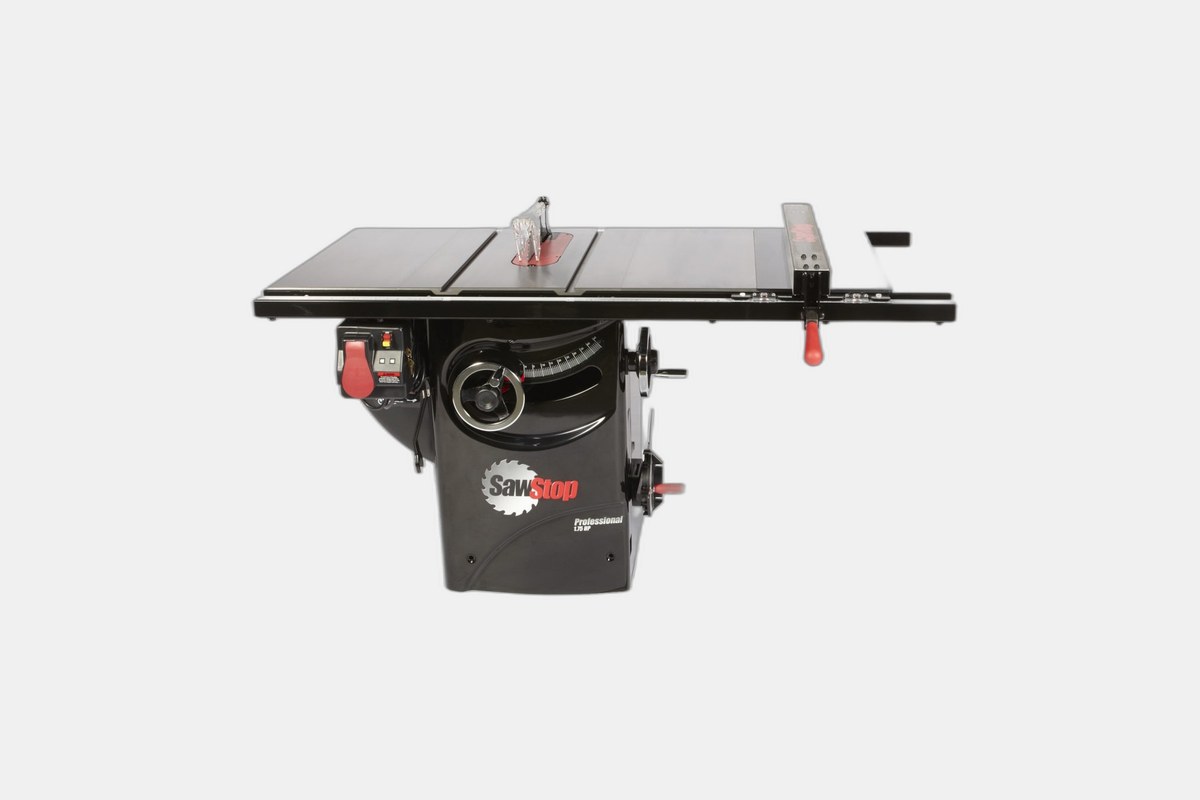
Okay, let’s talk about the big one, which comes with a big price tag of about $3,025. This isn’t a portable saw; it’s the centerpiece of a serious woodworking shop. And its main feature is one you hope to never use.
The SawStop technology is incredible. If your skin touches the blade, it stops and drops below the table in milliseconds. It’ll save your finger, guaranteed. Beyond the safety, it’s just a beautiful machine—rock solid, dead-on accurate with its T-glide fence, and the dust collection is fantastic.
The Downside: It’s extremely expensive. The price is a huge barrier for hobbyists, and you have to replace the brake cartridge if it ever fires.
This Skilsaw beast costs about $749. If your main job is ripping through thick, heavy lumber all day, this is your saw. It’s all about pure, unapologetic torque.
Instead of a typical direct-drive motor, this uses worm drive gearing. All you need to know is that it gives the blade incredible twisting force. It plows through 4x material and dense hardwoods without even hesitating. The stand is built like a tank to handle the extra weight and power.
The Downside: All that power comes with a lot of weight. This thing is heavy, so it’s not as easy to toss in the back of the truck as some other “portable” saws.
Coming in at around $600, the Ridgid offers a ton of performance for the money. I think this is one of the best values out there for a serious DIYer or a pro on a budget.
It has the power and rip capacity you need for most jobsite tasks, from breaking down sheets of plywood to ripping 2x4s. But the real selling point for me is Ridgid’s Lifetime Service Agreement. As long as you register it, you get free parts and service for life. That’s hard to beat.
The Downside: The safety features are pretty basic. You don’t get the advanced systems you’ll find on more expensive saws, so you just have to be mindful.
The tool-only version of this Milwaukee saw is about $449. If you’re already in Milwaukee’s M18 battery system, this is a no-brainer for a portable saw. The freedom of not having a cord is just fantastic.
Don’t let the battery power fool you; this thing has the muscle of a 15-amp corded saw. It cuts fast and clean. It’s also built tough with an all-metal frame, and the One-Key tracking is a nice touch for preventing theft on a busy job site.
The Downside: The 8-1/4-inch blade means you have a shallower cut depth than a standard 10-inch saw. It’s fine for most framing lumber and plywood, but you can’t cut through a 4×4 in a single pass.
At just $300, this Skil saw is my top pick for the homeowner who needs a reliable saw without breaking the bank. It’s perfect for weekend projects like building a deck or some garage shelves.
You still get the features that matter most, like a rack-and-pinion fence for accurate cuts and a folding stand for easy storage. It’s got enough power for pine, plywood, and even some hardwoods if you go slow. For the price, you just can’t complain.
The Downside: Its rip capacity is smaller than the more expensive jobsite saws. You won’t be able to rip a full sheet of plywood right down the middle with it.
This Delta contractor saw costs around $1,800. It’s a great choice for a dedicated home workshop where you need more stability and precision than a portable saw can offer, but you don’t have the space or budget for a full cabinet saw.
The heavy cast iron table really dampens vibration, which leads to incredibly smooth cuts. The fence system is rock-solid and a pleasure to use. It’s a big step up from any jobsite model and feels like a true piece of workshop machinery.
The Downside: Depending on the specific model and fence configuration, the rip capacity can be less than some of the high-end portable saws, which is surprising.
There’s no single “best” table saw for everyone. Your choice really depends on what you’re doing. Are you a contractor throwing a saw in your truck every day, or a hobbyist building furniture in the garage on weekends?
I tried to pick saws that excel in their specific category. For the portable saws, I focused on ease of setup, a reliable fence, and enough power for common jobsite materials. For the bigger saws, stability, precision, and overall build quality were more important.
Ultimately, the best advice I can give is to be honest about your needs. Buying a huge cabinet saw when you only have a one-car garage is a recipe for frustration. And remember, no matter which saw you get, the most important feature is using it safely. Read the manual, use your push sticks, and always respect the tool.
The 6 Best Miter Saws for Your Next DIY Project
The 6 Best Pole Saws
The 8 Best Chainsaws Will Make Heavy-Duty Yard Work a Breeze
The 7 Best Air Compressors for Home, Car, and Garage Use